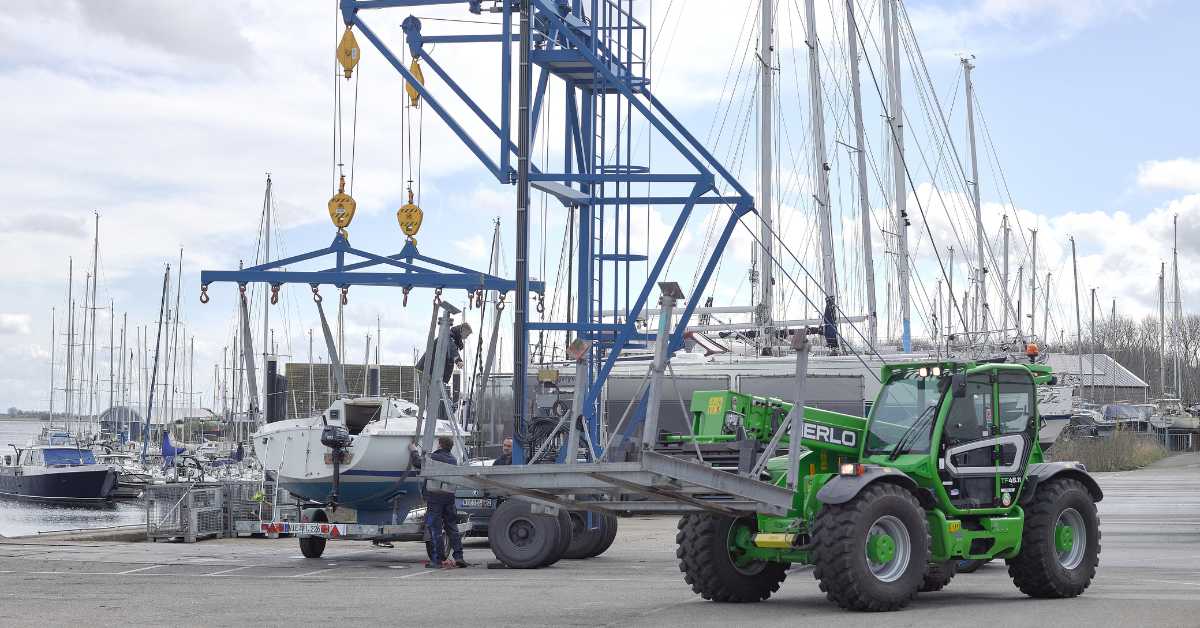
How to choose a rotating telehandler for construction sites: a practical guide
A practical guide
What is a rotating telehandler and why it is essential on a construction site
The rotating telehandler is a multi-purpose machine designed for lifting loads at heights, capable of rotating the turret by 360°, ensuring maximum operational flexibility even in complex spaces. Unlike traditional lifting equipment, it integrates the functions of multiple machines into a single solution, combining the features of cranes, aerial work platforms and telehandlers.
On modern construction sites, where efficiency, safety and speed are critical factors, a rotating telehandler represents a strategic choice for optimising operations. Thanks to continuous rotation, the operator can work without repositioning the machine, reducing downtime and increasing productivity. This results in a smoother workflow, particularly in urban environments or where space is limited.
Compared to fixed telehandlers, the rotating model offers superior versatility, allowing a single machine to perform a wide variety of tasks. With the use of specific attachments, it can be quickly transformed from a lifting machine into an aerial work platform or a fully fledged construction crane, effectively meeting the dynamic needs of businesses.
In a sector increasingly focused on cost reduction and resource optimisation, choosing a rotating telehandler means investing in operational efficiency and flexibility. It is not simply a machine, but a strategic ally capable of improving overall site management while ensuring high standards of safety and control.
When to choose a rotating telehandler over other lifting machines
Choosing a rotating telehandler over other lifting machines is not merely a technical matter, but a strategic decision directly linked to site efficiency. In many operational contexts, cranes, aerial work platforms and fixed telehandlers have structural limitations that can slow down operations and increase running costs.
Cranes, for example, offer a high lifting capacity, but require set-up time, dedicated space and significant investment. Similarly, aerial work platforms are ideal for working at heights, but do not allow for the handling of heavy loads, making it necessary to use multiple machines in combination. Fixed telehandlers, on the other hand, offer good lifting capacity but are limited in their movements and require frequent repositioning.
It is precisely in this context that the rotating telehandler demonstrates its greatest value, thanks to its ability to integrate multiple functions into a single machine. The 360° rotation allows operations across multiple areas of the site without constant repositioning, while compatibility with various attachments enables rapid transitions between tasks, increasing productivity.
The rotating telehandler is the ideal choice for complex, urban or confined worksites, where flexibility and speed make all the difference. Moreover, it is particularly suited to projects requiring simultaneous operations, such as material handling and work at heights, reducing the need for multiple machines and operators.
Ultimately, choosing a rotating telehandler means simplifying site management, improving operational efficiency and optimising investment over the medium to long term. It is a solution designed for those seeking high performance, versatility and total operational control.
The main criteria for choosing a rotating telehandler
Choosing the right rotating telehandler for your site means carefully evaluating a range of technical and operational parameters that directly affect productivity, safety and return on investment. An informed choice allows you to avoid inefficiencies, reduce costs and maximise the machine’s performance at every stage of the project.
Lift height and reach
Lift height and reach are two of the most important criteria when selecting a rotating telehandler. These parameters determine the machine’s ability to reach specific heights and distances, directly influencing the type of work that can be carried out. On sites with multi-storey buildings or complex structures, choosing a model with adequate performance helps avoid operational limitations and improve overall efficiency.
Maximum capacity
Load capacity indicates the maximum weight that the telehandler can safely lift and is a key factor in the selection process. It is essential to consider not only the maximum load, but also how the lifting capacity varies depending on the height and reach, in order to ensure optimal operating conditions at all times. A properly sized machine allows work to be carried out safely without compromising on performance.
Stability and safety on site
Stability is a crucial factor, especially on more complex sites or uneven ground. The latest generation Merlo rotating telehandlers incorporate advanced control and stabilisation systems to ensure precision and safety in every movement. This translates into greater operator protection and a reduction in operational risks.
Versatility and compatible attachments
One of the main strengths of the rotating telehandler is its versatility, made possible through compatibility with a wide range of attachments. Forks, hooks and personnel baskets: the ability to configure the machine based on the operational requirements allows multiple tasks to be carried out using a single machine, reducing both costs and time. This flexibility represents a tangible competitive advantage for businesses.
Ease of use and on-board technology
The presence of advanced on-board technology has a significant impact on operational efficiency. Intuitive control systems, digital interfaces and smart automations simplify the operator’s work, improving both precision and execution speed. A machine that is easy to use also reduces training time and increases productivity from the very first use.
Carefully evaluating these criteria allows you to identify the rotating telehandler best suited to your needs, transforming a simple purchase into a genuine strategic investment for the construction site.
The Merlo Roto models: technology and innovation at the service of construction sites
In the world of rotating telehandlers, Merlo stands out as a benchmark for technological innovation, reliability and safety. The company has developed a Roto range designed to provide a concrete response to the needs of modern construction sites, where versatility and high performance are essential for remaining competitive.
Merlo’s design philosophy is based on an integrated approach focused on the operator, productivity and sustainability. Each machine is designed to provide maximum control at every stage of the job, thanks to advanced systems that optimise movements and improve operational precision. This translates into more efficient site management and a significant reduction in wasted time and resources.
One of the distinctive features of Merlo rotating telehandlers is their high level of safety, ensured by intelligent load and stability control technologies. These systems enable constant monitoring of operating conditions, preventing hazardous situations and supporting the operator in making critical decisions. In a context where safety is an absolute priority, this focus represents a fundamental added value.
At the same time, Merlo continues to invest in sustainable solutions, developing machines that are increasingly energy-efficient and environmentally friendly. Advanced engines and optimised fuel consumption help reduce environmental impact without compromising on performance, meeting the evolving demands of the construction sector.
Choosing a Merlo Roto model therefore means opting for advanced technology designed to last and to deliver tangible improvements in site performance. It is not simply a machine, but a complete solution that combines innovation, safety and sustainability within a single operational tool.
The new Roto 50.16 and Roto 50.18 models: performance and advantages
The new Roto 50.16 and Roto 50.18 represent the evolution of Merlo technology, designed to deliver high performance, maximum versatility and advanced safety on the most demanding construction sites. Both models are developed to meet the needs of companies requiring uncompromising reliability and productivity, incorporating innovative solutions that enhance the operating experience.
Key features of the Roto 50.16
The Roto 50.16 stands out for its excellent balance between compactness and performance, making it ideal for construction sites with limited space but demanding operational requirements. With a substantial load capacity and impressive lift height, it enables work at heights to be carried out with precision and operational continuity.
Thanks to 207° locked rotation on each side and compatibility with a wide range of attachments, the Roto 50.16 offers outstanding operational flexibility. This results in reduced working times and greater efficiency in the management of daily site operations. Furthermore, the advanced control systems ensure safety and stability even in the most demanding conditions.
Key features of the Roto 50.18
The Roto 50.18 is designed for those requiring even greater performance, particularly in terms of lift height. This model enables greater heights to be reached while maintaining high standards of safety and precision, making it ideal for vertical construction sites or complex infrastructure projects.
The increased working height is combined with intelligent load management, enabling efficient operation even in changing conditions. Like the entire Merlo range, the Roto 50.18 also incorporates advanced technologies that support the operator, improve productivity and reduce the risk of human error.
Differences and which one to choose
The choice between the Roto 50.16 and the Roto 50.18 depends primarily on the specific requirements of the site, particularly the required working height and the types of applications. If the priority is compactness, agility and manoeuvrability in confined spaces, the 50.16 is an exceptionally efficient solution.
Conversely, for sites requiring greater reach and higher performance, the Roto 50.18 is the ideal choice. In both cases, these are machines designed to ensure maximum productivity, safety and versatility, representing a solid and long-term investment.
Adding one of these models to your fleet means taking a significant step forward in site management, optimising resources and improving operational performance.
Tangible advantages of using Merlo rotating telehandlers
Using a Merlo rotating telehandler on site delivers concrete and measurable benefits that directly impact productivity, costs and safety. It is not merely a technical choice, but a genuine competitive advantage for companies seeking to optimise their operations.
One of the main advantages is the optimisation of working times, thanks to the ability to carry out multiple operations using a single machine. The rotation function and compatibility with different attachments allow for a drastic reduction in downtime and unnecessary movement around the site, improving operational continuity. This approach enables tasks to be completed more quickly, helping to meet deadlines and increase overall productivity.
From an economic perspective, the use of a Merlo rotating model provides for a significant reduction in operating costs. By relying on a single machine instead of several, the costs associated with hire, maintenance and fleet management are considerably reduced. Furthermore, greater operational efficiency translates into a stronger return on investment over the medium to long term.
Safety is another key factor, particularly on modern construction sites where regulations are becoming increasingly stringent. The advanced systems integrated into Merlo rotating telehandlers support the operator at every stage of the job, constantly monitoring stability, load and operating conditions. This results in a tangible reduction in risks and a safer working environment for the entire team.
Finally, operational versatility enables rapid adaptation to different site requirements, increasing organisational flexibility. This means fewer interruptions, greater responsiveness and more efficient resource management — fundamental elements for tackling increasingly complex and dynamic construction sites.
Choosing a Merlo rotating telehandler means improving every operational aspect of the site, transforming efficiency and safety into tangible results.
How to choose the right model for your site
Choosing the most suitable rotating telehandler doesn't simply mean comparing technical specifications, but carefully analysing the site’s actual operational requirements, the type of work to be carried out and the level of performance required. A thorough assessment allows you to optimise your investment from the very first use, avoiding both oversized solutions and machines that are not fully suited to the tasks involved.
The first factor to consider is the maximum lift height required, together with the necessary load capacity and the frequency of operations. In this respect, the ROTO 50.16 and ROTO 50.18 are two models that are very similar in overall design, yet suited to slightly different operational needs: the ROTO 50.16 is an entry-level solution, ideal for those seeking an efficient, versatile and competitively priced rotating telehandler; the ROTO 50.18, on the other hand, offers an additional 2 metres of maximum height, making it more suitable for sites requiring greater vertical reach.
The ROTO 50.16 and ROTO 50.18 share an almost identical structural design. The main difference lies in the boom and the associated operational performance: thanks to its slightly more capable load chart, the ROTO 50.18 offers an advantage both at maximum height and in the overall distribution of load capacities, while remaining very similar to the ROTO 50.16 in terms of operating philosophy.
The ROTO 50.16 is particularly appealing to those seeking an entry-level machine in the rotating segment, with a more accessible price point and a distinctive market offering. In fact, it is a solution that provides access to the benefits of the Merlo rotating telehandler even in contexts where an 18-metre height is not required, offering an effective balance between performance, versatility and initial investment.
The ROTO 50.18, on the other hand, is the most suitable choice when the site demands a greater working range, particularly for more demanding tasks or operations where the additional 2 metres can make a real difference. Its more favourable load chart allows certain operations at heights to be managed more effectively, ensuring enhanced performance in situations where height and load capacity become decisive factors.
The choice between the two models should therefore be based on the actual operational requirements of the site: the ROTO 50.16 is ideal for lighter tasks, for companies seeking an accessible rotating solution, and for projects where 16 metres are entirely sufficient; the ROTO 50.18 is better suited to those requiring greater working heights and slightly superior load charts, while retaining a machine with a very similar overall design.
Choosing Merlo means relying on a range designed to meet diverse operational needs with tailored solutions, avoiding generic choices and ensuring an investment that is genuinely aligned with the work to be carried out. Thanks to technical support, continuous innovation and a strong focus on site efficiency, the choice of the right model becomes a more informed, certain and results-driven decision.
Why to invest in a rotating telehandler today
Investing in a rotating telehandler today means anticipating the future needs of the construction sector, which is increasingly focused on efficiency, safety and sustainability. In fact, modern construction sites require versatile, high-performance machines capable of adapting quickly to constantly evolving operating conditions, making the rotating telehandler a strategic and forward-looking choice.
The market is increasingly favouring multifunctional solutions capable of reducing the number of vehicles on site and optimising available resources. In this context, rotating telehandlers provide a practical response to the need to reduce operating costs without compromising on performance, thereby strengthening the competitiveness of the companies who adopt them.
From an innovation perspective, the latest models incorporate advanced technologies that enhance safety, precision and ease of use. This translates into greater productivity and a reduction in operational errors, key factors in meeting project deadlines and budget targets.
Sustainability is also playing an increasingly central role in investment decisions. Merlo rotating telehandlers are designed to optimise fuel consumption and emissions, contributing to a more efficient and environmentally responsible construction site without compromising on performance.
Finally, return on investment (ROI) remains one of the most important considerations. Thanks to their versatility and ability to replace multiple machines, rotating telehandlers allow the initial investment to be recouped quickly, generating value over the medium to long term.
Choosing a rotating telehandler today therefore means investing in a solution that delivers tangible improvements in site performance, ensuring efficiency, safety and long-term competitiveness.
Contacts
Do you need to request information or receive clarification on Merlo products and service? Contact us!
Commercial branch
Merlo UK Limited
Headlands Business Park - BH24 3PB
Ringwood Salisbury Rd, Blashford - United Kingdom
TEL01425 480806
FAX01425 477478
EMAILinfo@merlo.co.uk